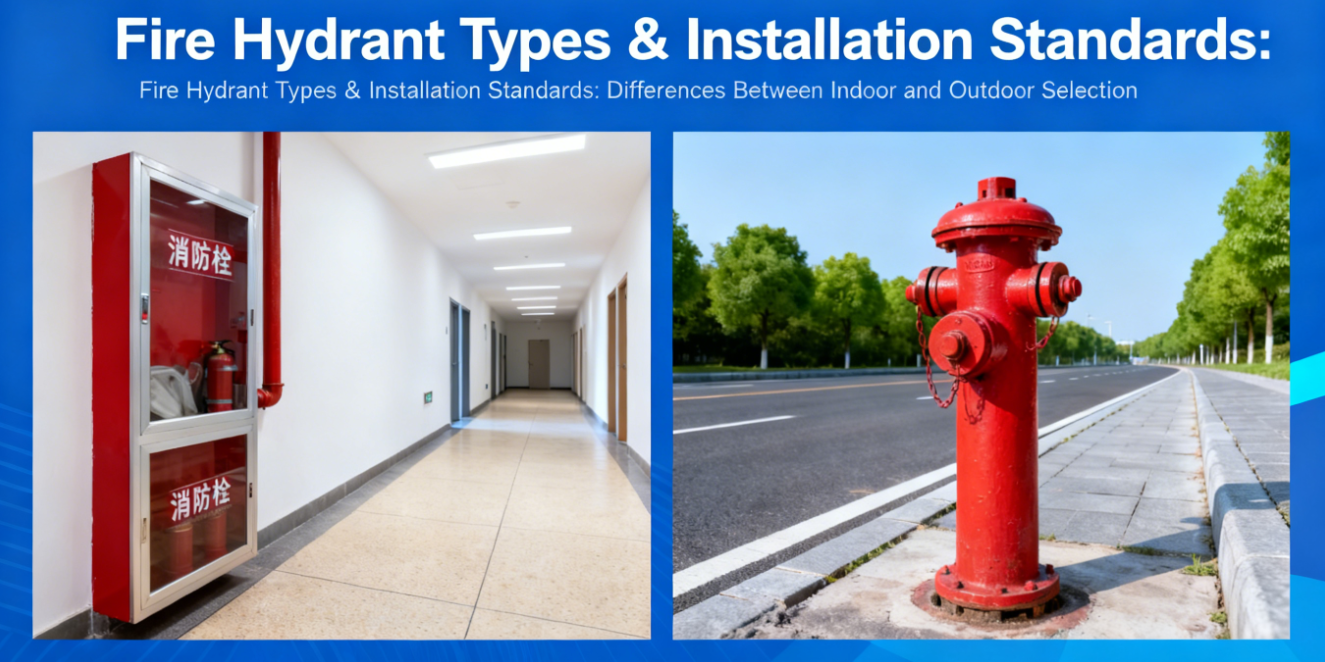
Fire Hydrant Types & Installation Standards: Differences Between Indoor and Outdoor Selection
Nov 26, 2025
In the fire safety system, fire hydrants, as core water supply equipment, their scientific selection and installation directly determine the efficiency of fire emergency response. There are significant differences between indoor and outdoor environments, so the type selection and installation standards of fire hydrants need to be targeted—choosing the right equipment and installing it in the correct position can quickly control fires in the early stage and minimize loss of life and property. As a professional fire hydrant manufacturer with 20 years of industry experience, we detail the selection differences and core installation points of indoor and outdoor fire hydrants for you.
I. First, Clarify: Core Functional Differences Between Indoor and Outdoor Fire Hydrants
Indoor Fire Hydrants:Focusing on the initial fire suppression within the building, it needs to be used in conjunction with fire hoses and water guns to quickly respond to fire situations in enclosed spaces such as floors, machine rooms, and warehouses, emphasizing convenience and adaptability.
Outdoor Fire Hydrants:It is designed to handle large-scale fires on the exterior of buildings, providing water supply for fire engines or directly connecting hose lines for firefighting. It must be able to withstand harsh weather conditions, emphasizing high pressure, large flow rate and easy identification.
II. Mainstream Types and Selection Key Points of Indoor and Outdoor Fire Hydrants
(I) Indoor Fire Hydrants: Classification by Installation Form and Selection Suggestions
Type
Feature
Application Scenarios
Selection Priority
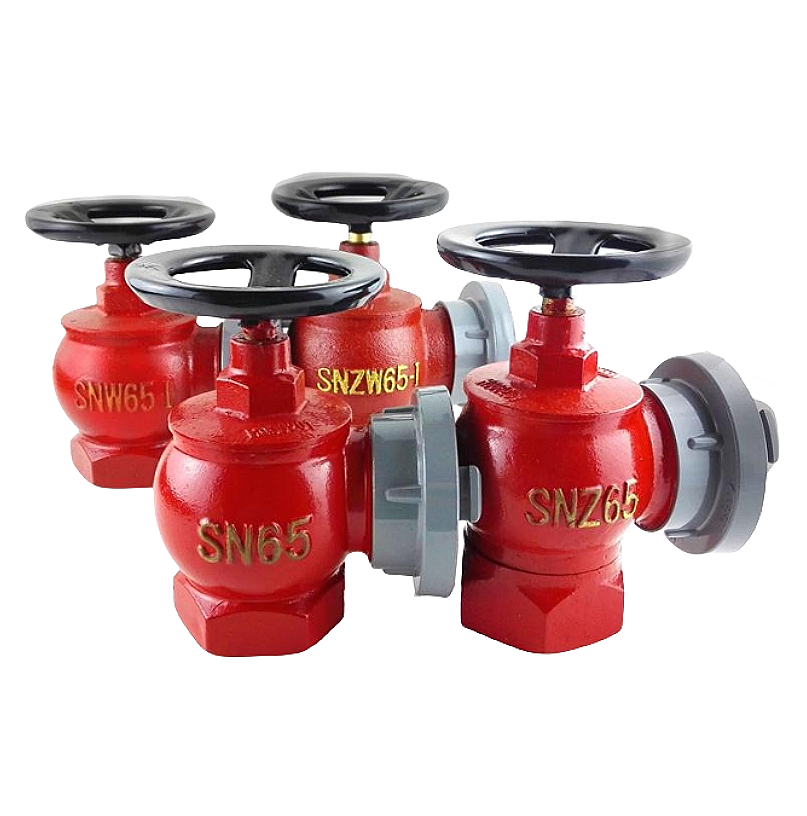
Ordinary Indoor Fire Hydrant
The structure is simple, equipped with valves and interfaces. It needs to be installed in combination with a fire box.
Office buildings, shopping malls, residential buildings, etc. (ordinary buildings)
★★★★★High versatility and controllable costs
Pressure-Reducing and Stabilizing Indoor Fire Hydrant
Built-in pressure reduction device, ensuring stable water pressure
High-rise buildings (with more than 10 floors) and areas with high water pressure
★★★★☆ Prevent excessive water pressure from damaging the equipment or interfering with the firefighting process.
Rotary Indoor Fire Hydrant
The interface can rotate 360 degrees and is highly flexible to operate.
Narrow space, computer room, underground garage
★★★☆☆Adapt to complex installation environments
(II) Outdoor Fire Hydrants: Classification by Installation Position and Selection Suggestions
Type
Features
Applicable Scenarios
Selection Priority
Above-Ground Outdoor Fire Hydrant
Exposed installation, exposed interfaces, easy to operate
Urban roads, parks, open areas
★★★★★ Easy maintenance, high recognition rate
Underground Outdoor Fire Hydrant
Underground installation, with only the operation port exposed, without affecting traffic.
The city center, pedestrian street, dense commercial area
★★★★☆ High aesthetic quality, avoiding damage from collisions
Anti-Collision Outdoor Fire Hydrant
Built-in buffer device, which can reset after being impacted
Parking lot, main road, construction area
★★★☆☆Essential for high-risk areas, reducing maintenance costs
III. Core Points of Indoor and Outdoor Fire Hydrant Installation Standards (Must Read!)
(I) Indoor Fire Hydrant Installation Standards
Position Requirement: Install near evacuation routes and stairwells for quick access; 1.1m above the ground, with the water outlet facing the wall or at a 45° angle to the wall, without obstruction.
Pressure and Flow: High-rise buildings must install pressure-reducing and stabilizing types to ensure the water pressure at the most unfavorable point is ≥0.07MPa and the flow rate is ≥5L/s.
Supporting Requirements: Must be installed as a complete set with fire cabinets, hoses (length ≤25m), and water guns; the fire cabinet door must have a "Fire Hydrant" label, and the opening angle ≥120°.
(II) Outdoor Fire Hydrant Installation Standards
Spacing Requirement: Spacing ≤120m on urban roads, ≤150m in industrial areas and parks to ensure full coverage without dead ends during fires.
Burial Depth and Protection: Underground type burial depth ≥0.6m (below the frost layer), above-ground type must be equipped with anti-collision guardrails; the interface must be equipped with a dust cap to prevent debris from entering.
Water Pressure Requirement: Working pressure ≥0.6MPa to meet the water absorption pressure requirements of fire trucks; the water outlet must be compatible with standard fire interfaces (DN100/DN150).
IV. Common Mistakes in Selection and Installation, Avoid These Pitfalls!
Mistake 1: Mixing indoor and outdoor fire hydrants—outdoor fire hydrants are not corrosion-resistant and prone to rust when used indoors; indoor fire hydrants have insufficient pressure to meet the needs of large-area outdoor fire extinguishing.
Mistake 2: Concealed installation position—indoor fire hydrants blocked by debris, outdoor fire hydrants covered by greenery, delaying fire extinguishing.
Mistake 3: Ignoring anti-freezing measures—outdoor fire hydrants in northern regions not insulated, prone to freezing and cracking in winter, resulting in unusability.
V. Why Choose Our Fire Hydrants?
As a fire hydrant manufacturer with 20 years of experience, our products combine quality and adaptability:
The entire series has passed 3C certification and ISO9001 quality system certification, with complete indoor and outdoor models, supporting customized production (such as special pressure, interface, and material requirements).
Core components are made of brass and ductile iron, corrosion-resistant and anti-aging; outdoor models are added with anti-freezing and anti-collision designs, adapting to different climates and environments.
Provide one-stop service: from selection consultation, technical scheme design to installation guidance and after-sales maintenance, the professional team follows up the whole process to ensure the equipment meets fire safety standards.
VI. Consult Now to Get Exclusive Fire Hydrant Solutions!
Whether you are a construction project, property operation and maintenance company, or fire engineering company, if you need to select suitable fire hydrants according to project scenarios (indoor/outdoor, high-rise building/ordinary building, northern/southern climate), or want to know product quotes, customization plans, and installation standard details, please feel free to contact us!
📧Email:Jony@jyfire.com.cn
📱 Phone:+86-18159244550
🌐 Factory Address:福建省泉州市南安市溪美镇成功科技园区三期
(Factory Address: Phase 3, Chenggong Technology Park, Ximei Town, Nan'an, Quanzhou, Fujian Province)
We will provide you with free selection consultation and technical solutions to help your project meet fire safety standards and build a solid safety line!